The internet has changed dramatically since the first commercial websites appeared in the 1990s. While countless innovations have transformed the way we communicate, shop, and do business online, one element has remained at the heart of every website: the domain name.
For decades, .com has been the undisputed leader among domain extensions. It has become synonymous with credibility, professionalism, and global business. However, the digital landscape is evolving. Hundreds of new generic Top-Level Domains (gTLDs) have entered the market, offering businesses, creators, and organizations more branding opportunities than ever before.
As artificial intelligence, cloud computing, Web3, and emerging technologies reshape the internet, many people are asking an important question: Will the next generation of internet domains look very different from today’s?
This article explores the evolution of domain extensions, the growing role of new gTLDs, and predictions about how internet domains may evolve over the next decade.
Understanding Domain Extensions
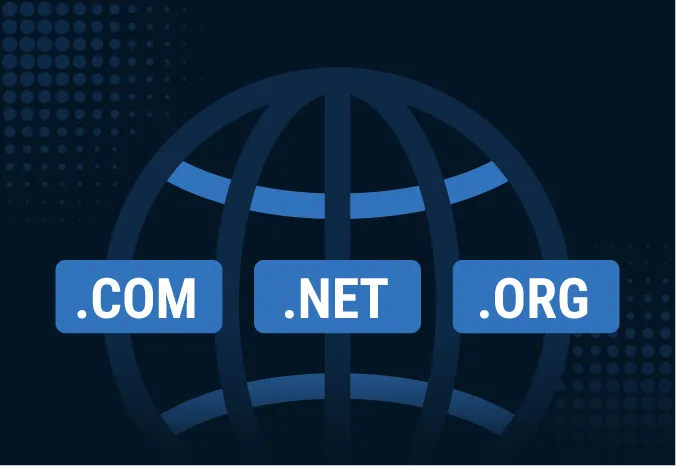
A domain extension, also known as a Top-Level Domain (TLD), is the final part of a web address that appears after the last period.
Common examples include:
- .com
- .org
- .net
- .edu
- .gov
Over time, internet authorities introduced hundreds of generic Top-Level Domains (gTLDs) to provide more naming options and better reflect different industries and purposes.
Some popular gTLDs include:
- .online
- .store
- .blog
- .app
- .tech
- .cloud
- .shop
- .design
- .media
These extensions allow businesses to create more descriptive and memorable online identities.
Why .COM Became the Internet Standard
When the commercial internet began expanding, .com quickly became the preferred extension for businesses.
Several factors contributed to its dominance:
Universal Recognition
Almost every internet user recognizes a .com website.
Trust and Credibility
Consumers often associate .com domains with established businesses.
Marketing Simplicity
People naturally assume many business websites end in .com.
Limited Competition
For many years, there were very few alternatives.
Because of these advantages, premium .com domains remain some of the most valuable digital assets in the world.
Why New gTLDs Were Introduced
As millions of .com domains became unavailable, businesses struggled to find suitable names.
To increase choice and encourage innovation, hundreds of new gTLDs were launched.
These new extensions allow organizations to better represent their industries.
Examples include:
- .store for online retailers
- .app for software developers
- .blog for publishers
- .tech for technology companies
- .photography for photographers
- .agency for agencies
- .health for healthcare businesses
Instead of forcing businesses into long or awkward .com names, new gTLDs provide more flexible branding options.
AI Is Changing Domain Preferences
Artificial intelligence is influencing how businesses choose domain names.
Modern AI-powered branding tools analyze:
- Business goals
- Customer behavior
- Search trends
- Industry competition
- Language patterns
- Brand memorability
Rather than recommending only .com domains, AI increasingly suggests extensions that closely match a company’s purpose.
For example:
An AI startup may prefer:
- FutureVision.ai
A software company could select:
- NextPlatform.app
A cloud provider might use:
- SecureStorage.cloud
As AI becomes more sophisticated, domain selection is expected to become increasingly strategic.
Industry-Specific Branding Will Continue to Grow
One of the biggest advantages of new gTLDs is their ability to communicate industry expertise immediately.
A visitor seeing:
- GreenEnergy.tech
- HealthyLife.health
- CreativeStudio.design
can instantly understand what the business offers.
This descriptive branding helps businesses stand out in competitive markets.
As more industries embrace specialized digital identities, industry-focused gTLDs are expected to become increasingly popular.
The Rise of Technology-Focused Domains
Technology companies have been among the earliest adopters of new domain extensions.
Some of the fastest-growing include:
.AI
Popular among artificial intelligence startups and research organizations.
.TECH
Widely used by software companies, developers, and IT consultants.
.APP
Ideal for mobile applications and software products.
.CLOUD
Frequently chosen by cloud service providers.
These extensions reinforce innovation while helping businesses differentiate themselves from competitors.
Country-Code Domains Will Remain Relevant
Although global branding is important, many businesses continue to prioritize local markets.
Country-code Top-Level Domains (ccTLDs) include:
- .uk
- .ca
- .au
- .jp
- .de
- .id
These domains help businesses:
- Build local trust
- Improve regional marketing
- Support localized SEO strategies
- Connect with national audiences
Even global companies often operate country-specific websites for better customer experiences.
Voice Search Encourages Simpler Domains
Voice assistants are changing how people interact with the internet.
Instead of typing, users increasingly ask questions aloud.
This trend favors domain names that are:
- Short
- Easy to pronounce
- Easy to remember
- Difficult to confuse
Complex spellings, unusual abbreviations, and long keyword-rich domains become less practical in voice-driven environments.
Future branding strategies will likely emphasize simplicity over excessive keyword optimization.
SEO Is About More Than Domain Extensions
Many website owners believe that choosing a particular TLD automatically improves search rankings.
In reality, modern search engines prioritize:
- Helpful content
- User experience
- Website performance
- Expertise
- Authority
- Security
While a relevant domain extension may improve branding and encourage clicks, search engines primarily evaluate the quality and usefulness of the website itself.
A trusted website with excellent content can succeed regardless of whether it uses .com, .tech, .store, or another reputable extension.
Challenges Facing New gTLDs
Although adoption continues to grow, newer domain extensions still face several challenges.
Consumer Familiarity
Many users automatically type “.com” when searching for websites.
Brand Protection
Businesses often register multiple domain extensions to protect their brands.
Marketing Costs
Companies using newer TLDs may need additional branding efforts to increase awareness.
Trust
Some consumers still perceive .com domains as more established.
As internet users become more familiar with newer extensions, these challenges are expected to gradually diminish.
Predictions for the Next Generation of Internet Domains
Several trends are likely to shape the future of domain names.
1. .COM Will Remain Strong
Despite growing competition, .com will likely remain the preferred choice for many global businesses.
2. Specialized gTLDs Will Expand
Industries such as healthcare, education, finance, technology, and e-commerce will continue adopting descriptive domain extensions.
3. AI Will Personalize Domain Selection
Businesses will increasingly rely on AI to recommend domain names based on branding, audience, and long-term growth.
4. Premium Domains Will Increase in Value
As digital competition grows, memorable and brandable domains will become even more desirable.
5. Global and Local Strategies Will Coexist
Many organizations will combine global domains with country-specific websites to serve regional audiences more effectively.
Choosing the Right Domain for the Future
If you’re launching a website today, consider these best practices:
- Select a memorable and easy-to-spell name.
- Prioritize branding over exact-match keywords.
- Choose a domain extension that reflects your industry.
- Register multiple extensions if your budget allows.
- Think about long-term business growth.
- Enable domain security features.
- Maintain consistent branding across websites and social media.
Remember that your domain should support your business not only today but also five or ten years from now.
Common Misconceptions
“New gTLDs Will Replace .COM”
The future is more likely to involve coexistence rather than replacement. Different extensions serve different purposes and audiences.
“Only Technology Companies Can Use New Extensions”
Businesses across many industries—from retail to healthcare—are adopting modern domain extensions that match their services.
“A Better TLD Guarantees Better Rankings”
Search engines reward valuable, trustworthy content more than the extension itself.
Conclusion
The evolution of internet domains reflects the changing needs of businesses, creators, and internet users. While .com continues to set the standard for global recognition and trust, new gTLDs have opened the door to more creative, descriptive, and industry-specific branding opportunities.
Emerging technologies such as artificial intelligence, cloud computing, and voice search are encouraging businesses to think more strategically about their online identities. Rather than relying solely on tradition, organizations now have the flexibility to choose domain extensions that better represent their industries, audiences, and long-term goals.
The next generation of internet domains is unlikely to be defined by a single extension. Instead, it will be shaped by diversity, innovation, and branding flexibility. Businesses that choose memorable, secure, and future-ready domain names will be well positioned to build lasting digital identities in an increasingly competitive online world.